Selling Property in Sri Lanka: Capital Gains Tax Guide
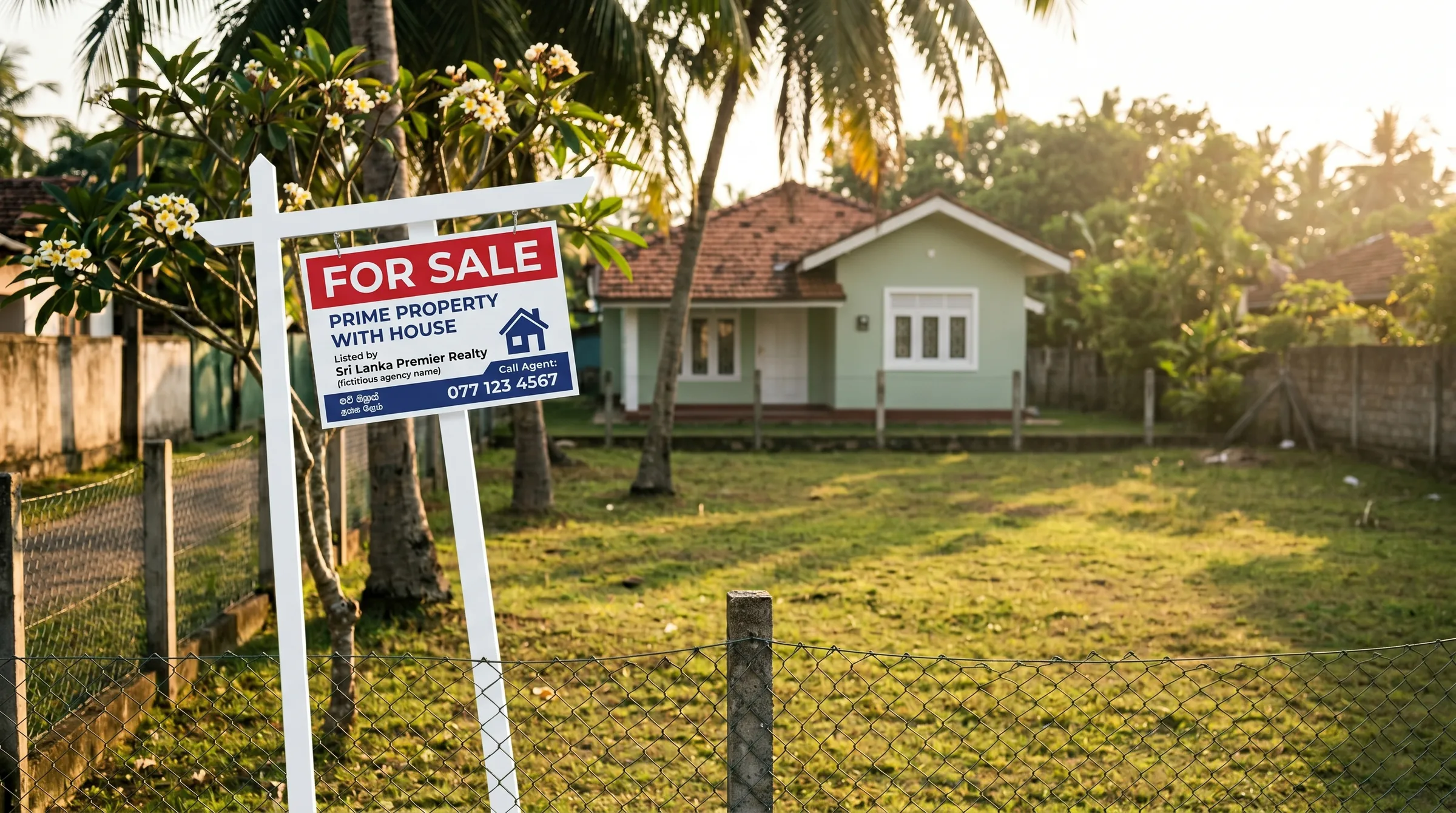
Selling land or a building in Sri Lanka isn't quite like selling a car or some shares. The cash hits your account, the paperwork goes to the Registrar-General, and somewhere in the middle of all that the Inland Revenue Department expects a Capital Gains Tax Return on your desk within weeks. Most sellers don't find out about that deadline until their lawyer mentions it on transfer day.
This guide walks through what you actually owe, how to work it out with a real example, and what changed under the 2026 Amendment Act, including the jump in the rate from 10% to 15%. If you're planning a sale, the timing and the new rate matter more than you'd think.
What is the capital gains tax on selling property in Sri Lanka?
When a resident individual sells an investment asset, the gain is taxed at a flat 15%. That rate took effect on June 3, 2026 under the Inland Revenue (Amendment) Act, No. 11 of 2026, which amended the First Schedule, Paragraph 1(2)(a) of the principal Act. If your sale closed before June 3, 2026, the old 10% rate applies, so a late filer for an earlier disposal still uses 10%.
"Investment asset" is wide. It includes land, buildings, unlisted shares, and most other capital assets you hold as part of your investments. What it doesn't include is your principal residence (more on that below) or shares quoted on the Colombo Stock Exchange, which are fully exempt.
A few things worth noting up front:
- Capital gains are taxed separately from your other income. The 6% to 36% progressive slabs you pay on salary or business profits don't apply here.
- Your Rs. 1,800,000 personal relief cannot be set off against capital gains. The Act is explicit on this.
- Capital gains tax is not part of your quarterly installments. Section 90 specifically excludes investment-asset gains from that schedule.
So whatever you owe, you owe in one lump sum, on one specific date.
How do I calculate my capital gain?
The formula is the simple part. Section 36 defines a gain as:
Gain = Consideration Received − Cost of the Asset
What people miss is everything that goes into "cost." Section 37 lets you add a fair list of items to the headline purchase price, and a careful seller can shave a meaningful amount off the gain by tracking each one.
Your cost base includes:
- Acquisition cost. What you actually paid for the property at the time of purchase.
- Improvements. Money spent altering or improving the asset. A new boundary wall, a second floor, a major renovation. Routine repairs don't count, but anything that adds to the value of the asset does.
- Incidental costs of acquisition. Stamp duty paid at the time of purchase, legal fees, valuation fees, agent commissions.
- Incidental costs of realization. Advertising the property for sale, the broker's commission, transfer fees, professional fees on the sale side.
If you bought your property before April 2018, the cost base is set to the market value on September 30, 2017 under Section 203(4) of the Act, not your original purchase price. Anything you spent on improvements after that date is added on top. This transitional rule prevents the law from taxing gains that built up under earlier tax regimes.
Keep the receipts. Without documentation, the IRD will work from the bare purchase price on the deed, and you'll pay tax on a larger gain than you actually made.
What's a worked example of the calculation?
Let's work through a realistic case. Suppose you bought a 12-perch plot in Gampaha for Rs. 8,000,000 in 2019. You've held it as an investment ever since. In 2026 you sell it for Rs. 14,000,000. Along the way you spent Rs. 1,200,000 paving a road and building a boundary wall, and you paid Rs. 650,000 to your agent, lawyer, and valuer combined on the sale side.
| Item | Amount (LKR) |
|---|---|
| Sale price | 14,000,000 |
| Less: original purchase price | (8,000,000) |
| Less: improvements (road + wall) | (1,200,000) |
| Less: selling costs (agent, legal, valuation) | (650,000) |
| Taxable gain | 4,150,000 |
| Capital gains tax (15%) | 622,500 |
Without the improvements and selling-cost adjustments, the IRD would have taxed you on a Rs. 6,000,000 gain, which is Rs. 900,000 of tax. Tracking your costs saved you Rs. 277,500.
This is also why the IRD generally wants to see receipts for any cost you're claiming, especially improvements. A few photos and bank transfer records go a long way.
When is the capital gains tax due?
This is where people get caught out.
Capital gains tax is transactional. The clock starts on the date of sale, not at the end of the tax year. Under Section 93(3), you must file a Capital Gains Tax Return within 30 days after the end of the calendar month in which the sale happened. Under Section 82(2)(c)(i), the tax is payable on the same date the return is due.
So in our Gampaha example, if the transfer deed is signed on, say, June 12, 2026, the clock runs from the end of that month. Your return and your Rs. 622,500 payment are both due by July 30. For a fuller walkthrough of the deadline, including how the count works for sales late in a month, see our guide on when capital gains tax is due.
The filing deadline is enforceable, not advisory. Late payment triggers default interest at 1.5% per month on the unpaid amount, plus a separate late-filing penalty under Section 178. The IRD also has the power to recover the tax through asset seizure and travel bans, and capital gains transactions tend to be visible because the deed has to clear the Registrar-General.
Note that this is independent of your annual income tax return. If you sell a property and you also earn employment or business income, you'll end up filing two returns: one CGT return inside that thirty-day window, and your normal annual return for the year. Your quarterly tax payments on your other income carry on as usual.
Which property sales are exempt from capital gains tax?
Not every sale attracts the 15%. The three exemptions worth knowing about are:
- Your principal place of residence. If you've owned the home for the three years immediately before the sale, and you've lived in it for at least two of those three years (on a daily-basis test), the gain is fully exempt. The exemption is for resident individuals only.
- Small gains. A gain of Rs. 50,000 or less is exempt, as long as your total gains for the year don't exceed Rs. 600,000. This rarely helps with property, but it can apply to small disposals of other assets.
- Listed shares. Gains from selling shares quoted on the Colombo Stock Exchange are fully exempt.
The principal residence exemption is the one most homeowners care about. The key word is "place of residence." A house you've rented out for the last two years won't qualify even if you used to live there. And the ownership and occupancy tests are both required, not either-or.
What changed under the 2026 Amendment Act?
The Inland Revenue (Amendment) Act, No. 11 of 2026 brought three changes that property sellers need to know about. These are now law, not proposals.
- CGT rate rose from 10% to 15%. Section 36(1) of the Amendment Act updated the First Schedule rate, effective June 3, 2026 (the date the Act was certified). Sales that closed before June 3, 2026 are still taxed at the old 10% rate, which matters if you're a late filer for an earlier disposal.
- Mandatory TIN for property transactions, from April 1, 2026. You now need to present your TIN Certificate to the Registrar-General to register land or title, and to the local authority for building plan approval. This requirement sits in Section 103(6) of the Act. If you've been putting off TIN registration, see our TIN guide.
- New exemption for gifts to the Government or a public university. Under Section 46(3A), a transfer of an asset as a gift to the Government of Sri Lanka or a university is treated as a no-gain, no-loss event, so no capital gains tax arises.
The bigger picture is that capital gains compliance has tightened, not loosened. The TIN requirement in particular pulls property transactions firmly into the formal tax net, because no TIN means no registration, and no registration means no transfer.
How do I keep track of all this?
The administrative load on a property sale is annoyingly high. You need the original purchase price, every improvement receipt, every professional invoice from both sides of the transaction, and a clear paper trail of the sale itself. Then you have thirty days to assemble the CGT return and pay.
The moment you buy a property, start a folder, paper or digital, with the deed, stamp duty receipt, legal invoices, and valuation report. Every time you spend money on improvements, drop the receipt in. By the time you sell, ten years later, you'll have everything the IRD wants to see, and you'll be claiming every rupee of cost you're entitled to.
If you also earn employment or business income alongside your property holdings, our income tax calculation guide explains how the rest of your tax picture fits together. Landlords thinking about selling rental property should also read our rent relief guide for the income-side rules that apply while you still hold the asset.
Selling property isn't something most people do often, which is exactly why the rules feel unfamiliar. Take the filing deadline seriously, keep your receipts from day one of ownership, and remember the rate is now 15% on any sale closing on or after June 3, 2026. A bit of preparation turns a stressful month of paperwork into a single tidy return.
Frequently asked questions
Quick answers to common questions on this topic.
What is the current capital gains tax rate on property in Sri Lanka?
For resident individuals, gains from selling investment property are taxed at 15%, effective June 3, 2026 under the Inland Revenue (Amendment) Act, No. 11 of 2026, which amended Paragraph 1(2)(a) of the First Schedule. Disposals that closed before June 3, 2026 were taxed at 10%, which still matters if you are a late filer.
Is the sale of my home exempt from capital gains tax?
Yes, if it qualifies as your principal place of residence. You must have owned the property for the three years immediately before the sale and lived in it for at least two of those three years. If both conditions are met, the gain is fully exempt and you don't owe capital gains tax on that sale.
When do I have to pay capital gains tax after selling property?
Within 30 days after the end of the calendar month in which you sell. Section 93(3) of the Inland Revenue Act sets this window for filing the Capital Gains Tax Return, and Section 82(2)(c)(i) makes the tax payable on the same date. Capital gains tax is separate from your annual return and not part of your quarterly installments.
How do I calculate my capital gain on a property sale?
Take the sale price and subtract the cost of the asset. The cost includes what you paid to acquire the property, money spent on improvements, stamp duty, legal and agent fees, advertising costs, and valuation charges. The remaining figure is your taxable gain, and 15% of that is the tax.
What is the cost base if I bought my property before 2018?
For any investment asset held on September 30, 2017, the cost is deemed to be its market value on that date under Section 203(4) of the Act. Improvements and incidental costs incurred after September 30, 2017 are added to this base. You're only taxed on the appreciation that occurred after that date.
Are small property gains exempt from capital gains tax?
Yes, but the threshold is narrow. A gain of Rs. 50,000 or less is exempt, provided your total capital gains for the entire year of assessment do not exceed Rs. 600,000. Most property disposals are well above both thresholds, so this exemption rarely helps with land or building sales.
Will I need a TIN to register property from April 2026?
Yes. The Inland Revenue (Amendment) Act, No. 11 of 2026 makes it mandatory to submit your Taxpayer Identification Number (TIN) Certificate to the Registrar-General when registering land or title, and to your Local Authority when obtaining building plan approval. This is now law and applies from April 1, 2026, even where no capital gain arises.
Related reading
All articles →
Employee to Freelancer Mid-Year: How to File in Sri Lanka
Left a salaried job to freelance mid-year in Sri Lanka? Your old APIT becomes a tax credit, both phases go on one return, and instalments use last year's tax.
Double Taxation in Sri Lanka: Do You Pay Tax Twice?
Already paid tax abroad? Sri Lanka taxes residents on foreign income, but a Section 80 foreign tax credit stops you paying in full twice. Here's how it works.

Online Seller Tax in Sri Lanka: What You Actually Owe
Selling on Daraz, Etsy or Instagram in Sri Lanka? Learn how your store income is taxed, which selling costs you can deduct, and when quarterly payments start.