Rent Relief in Sri Lanka: How Landlords Claim the 25% Deduction
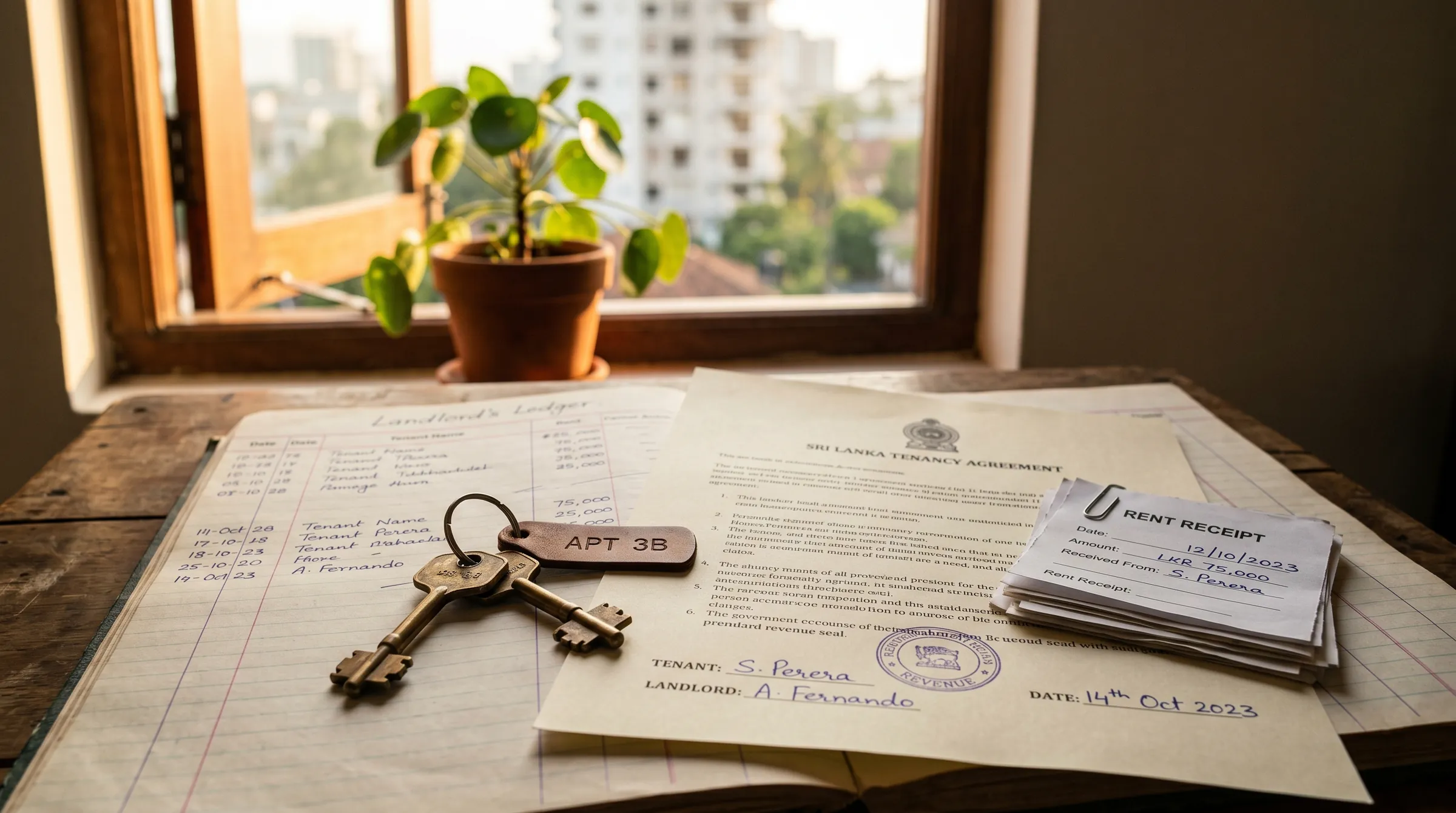
If you own a house, apartment, or commercial unit and rent it out, the Sri Lankan tax system quietly hands you a meaningful deduction every year. It is a deemed 25% relief on your rental income, no receipts needed, no fuss. Most landlords either do not know about it or assume it is too good to be true.
It is not too good to be true. It is written into the Inland Revenue Act, and resident individuals have been entitled to it since the 2017 reforms. The relief exists precisely because lawmakers know property needs repair, maintenance, and gradual replacement of fittings, and that getting a landlord to keep every receipt for every minor repair is unrealistic.
This guide walks through what the relief is, who can claim it, what records you need, and the trickier question of what to do when your actual maintenance costs blow past the 25% mark. We will work through a real example with Rs. 1,800,000 of annual rent so you can see, to the rupee, how much this relief is worth.
What is rent relief in Sri Lanka?
Rent relief is a deemed deduction equal to 25% of your total rental income for the Year of Assessment. It is granted under Section 52 of the Inland Revenue Act No. 24 of 2017, with the specific mechanics set out in Paragraph 2(c) of the Fifth Schedule of the Act.
The Act describes the relief as a deduction "for the repair, maintenance, and depreciation relating to the investment asset". In plain language, the government accepts that any rented property needs ongoing upkeep and gives you a flat 25% off the rent you collected, without asking for proof of what you actually spent.
This relief is subtracted from your rental income before the progressive tax slabs are applied. So if you collected Rs. 1,000,000 in rent, you take off Rs. 250,000 as relief, and only Rs. 750,000 gets added to your assessable income for tax purposes.
The Act uses the term "investment asset" to mean property held passively for rent, as opposed to a "business asset" used in an active trade. A house you own and rent out is an investment asset. A hotel you run yourself is a business asset. The 25% relief only applies to investment assets.
Who qualifies for the 25% rent relief?
Three conditions need to line up for you to claim it.
You must be a resident individual. The relief is restricted to natural persons who are tax residents of Sri Lanka for that Year of Assessment. Companies, partnerships, trusts, and other entities are not eligible. They have to claim actual expenses under the regular business income rules instead.
The property must be held as an investment asset. Passive rent collection counts. Active property management as a trade does not. If you own five office buildings and you are running them like a property business, the IRD can reclassify your activity, and the 25% relief disappears. For most individuals with one to three rented units, this is not a concern.
You must have actual rental income in the year. The 25% is calculated on rent you actually received, not on hypothetical rent or market value. If your property was vacant for six months, you only claim relief on the six months of rent you collected.
The relief applies equally to residential and commercial rental income. A landlord renting out an apartment in Colombo 6 and another renting an office unit in Pettah are both entitled to the same 25% deduction on the rent they collect, as long as they hold the property as investments rather than running an active property business.
What documents do you need to keep for rent relief?
Because the 25% is deemed, you do not have to submit anything proving how the relief was spent. You do not produce repair bills. You do not list out maintenance jobs. That is the whole point of a deemed relief.
But you still have to substantiate the rental income itself, and Section 120(1) of the Inland Revenue Act sets out specific record-keeping requirements.
Keep these documents for five years from the date of each transaction:
- Tenancy agreements for every tenant
- Bank statements showing rental receipts (especially important if rent is paid by bank transfer)
- Rent receipts or formal acknowledgements you issued to tenants
- Any TDS or WHT certificates if your tenant withheld tax on rent payments
You do not lodge these with your return. You hold on to them, and produce them if the IRD asks during an assessment or audit. Section 120 makes record-keeping mandatory, not optional, and the five-year window starts running from each individual transaction date.
Failing to keep proper records under Section 120 can lead to assessments based on the IRD's own estimates of your rental income, which are rarely in your favour, and the burden of proof shifts to you. Five years of tenancy contracts, bank statements, and rent receipts is the minimum you should maintain for every rental property you own.
What happens when your maintenance costs are higher than the 25% relief?
This is where the design of the relief gets interesting, and where most landlords need to make a judgment call.
The 25% deemed relief and a claim for actual expenses are mutually exclusive. The Act says the 25% is "only allowed to the extent no deduction or cost is claimed for any actual expenditures" on repair, maintenance, and depreciation for the same asset in the same year. You pick one path or the other for each property each year.
If your real-world repair costs in a given year ran well above 25% of the rent, you can elect to claim actual revenue expenses under Section 11 instead, but with two important catches.
First, only revenue expenses qualify. Section 11 covers items that do not last longer than 12 months. Touch-up painting, plumbing repairs, electrical fixes, replacement of broken fittings, pest control. These are deductible at their actual cost if you keep the invoices.
Second, capital expenses are not deductible at all for investment assets. A new roof, a major renovation, a built-in air conditioning system, an extension to the building. These are capital improvements, and the Act reserves the repair, improvement, and depreciation deductions (Section 14 for repairs and improvements, Section 16 for depreciation) for business assets only. Investment assets do not get to claim them. The 25% deemed relief exists partly to compensate for this gap.
Before you abandon the 25% relief and claim actual expenses, add up only the revenue expenses (short-life repairs and maintenance) for that year. If they comfortably exceed 25% of rent, claim actuals. If they are close to or below 25%, stay with the deemed relief and skip the paperwork. Major renovations are not deductible either way, so they should not factor into the comparison.
How much can you actually save? (A worked example)
Let us walk through a realistic case. Priya owns an apartment in Colombo 5 that she rents out for Rs. 150,000 per month. She also earns a salary as a marketing manager. For the Year of Assessment 2025/2026, here is how the rent relief plays out.
| Item | Amount |
|---|---|
| Annual rental income (Rs. 150,000 x 12) | Rs. 1,800,000 |
| Less: 25% deemed rent relief | (Rs. 450,000) |
| Taxable rental income | Rs. 1,350,000 |
That Rs. 450,000 deduction is the relief. It comes off the top of her rental income before anything else gets calculated.
If Priya's other income (salary and any investments) already puts her in the 30% marginal slab, every additional rupee of rental income would normally be taxed at 30%. The 25% relief shields Rs. 450,000 of her rent from that rate, saving her Rs. 135,000 in tax for the year. If her marginal slab is 36% instead, the saving rises to Rs. 162,000.
Across a typical five-year holding period, this single relief is worth Rs. 675,000 to Rs. 810,000 in tax savings, depending on her slab. That is real money, recurring every year, with no receipts to chase and no documentation to file beyond the standard tenancy records.
For lower-income landlords whose total assessable income falls into the 6%, 18%, or 24% slabs, the savings scale down proportionally, but the relief itself is still 25% of rent. Combined with the Rs. 1,800,000 personal relief and any other reliefs (such as the solar tax relief if you have panels), the cumulative effect on a small landlord's tax bill is substantial.
There is one more piece worth flagging. Rental income often pushes salaried landlords into the territory where they need to make quarterly tax payments. When you prepare your Statement of Estimated Tax, the 25% rent relief comes off your estimate, which directly reduces every quarterly instalment.
How does Taxable help you claim rent relief correctly?
Most landlords either miss this relief, claim it incorrectly, or get the bookkeeping wrong and lose the deduction during an IRD audit. The mechanics are not complicated, but the comparison between deemed relief and actual expenses, plus the five-year record retention, plus the interaction with quarterly payments, is more than most people want to track in a spreadsheet.
The platform also flags when actual revenue expenses are tracking above 25% so you know to switch to actuals for that year, and it keeps the supporting invoices linked to each expense entry. If the IRD ever asks, you have one place to produce every document. For a deeper look at how Taxable compares to spreadsheets and other Sri Lankan tax tools, see our breakdown of the best tax software in Sri Lanka.
Rent relief is one of the cleaner deductions in the Sri Lankan tax code. Twenty-five percent off your rent, no receipts required, available every year. If you are renting out a property and you are not claiming it, you are leaving money on the table.
Frequently asked questions
Quick answers to common questions on this topic.
Is the 25% rent relief automatic, or do I need to apply for it?
It is not automatic in the sense that the IRD does not apply it for you. You have to claim it yourself when you file your return for the Year of Assessment by including your rental income and the 25% deduction in the relevant schedule. No separate application is required, but if you do not claim it, you do not get it.
Can companies or partnerships claim the 25% rent relief?
No. The 25% deemed relief under Paragraph 2(c) of the Fifth Schedule is available only to resident individuals. Companies and other entities that earn rental income must instead claim actual repair, maintenance, and depreciation expenses under the regular business income rules, and must keep invoices and proof of payment for every claim.
Does rent relief apply to commercial property or only residential?
It applies to both. The Inland Revenue Act grants the 25% relief on rental income from any 'investment asset', which covers residential houses, apartments, and commercial buildings such as offices and shops, provided the property is held passively for rent and not actively run as a property business by the owner.
Can I claim rent relief if my property was vacant for part of the year?
Yes. The 25% relief is calculated on the rental income you actually received in the Year of Assessment, not on potential rent. If your property was vacant for six months and rented for six months, your relief is 25% of the rent collected during those six months. You cannot claim relief on imaginary rent.
What if I own multiple rental properties?
You can still claim the 25% on the combined rental income from all of them, as long as you are managing them passively as investments. The IRD may reclassify your activity as a property business if you own many properties and are actively managing them day to day, in which case the 25% relief no longer applies and actual expenses must be claimed.
Do I need to submit rent receipts to the IRD when filing?
You do not need to submit them with the return, but Section 120 of the Inland Revenue Act requires you to keep tenancy contracts, bank statements, and rent receipts for five years from the date of the transaction. The IRD can request these during an assessment or audit, and you must be able to produce them on demand.
Related reading
All articles →
Tax Exempt Income in Sri Lanka: Is Your Money Taxable?
Is your EPF, lottery win, pension or share gain tax exempt in Sri Lanka? Check each receipt against the Inland Revenue Act's list of exempt amounts.

Tax Relief vs Exemption vs Credit in Sri Lanka
Relief, exemption, qualifying payment, tax credit: four Sri Lankan tax words that work at different steps. One worked example shows where each one applies.

Money From Family Abroad: Is It Taxable in Sri Lanka?
Is money your family sends from abroad taxable in Sri Lanka? See where the Inland Revenue Act draws the line between a gift and income, and what records to keep.