Are Charitable Donations Tax Deductible in Sri Lanka?
Are Charitable Donations Tax Deductible in Sri Lanka?
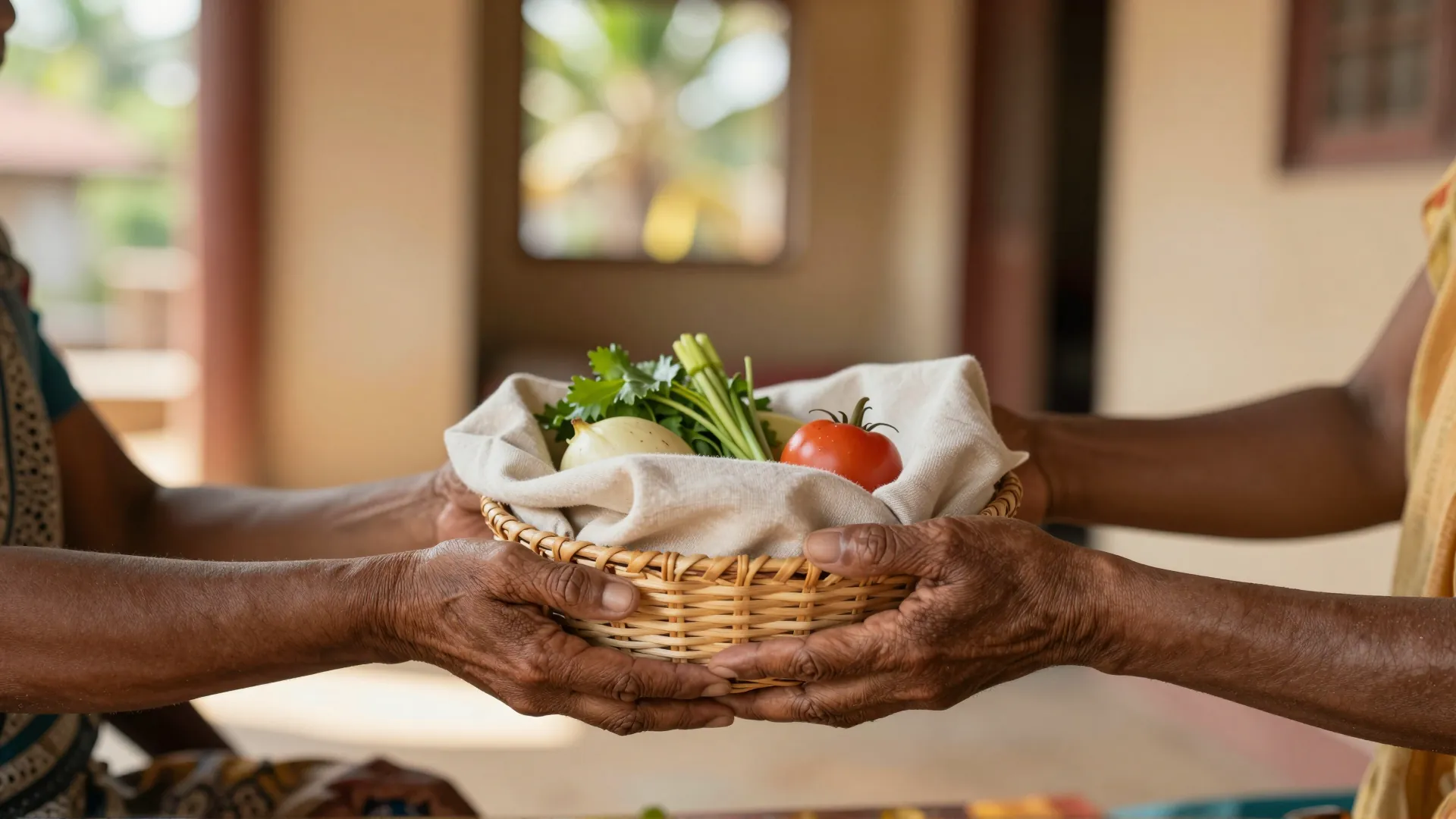
You gave Rs. 100,000 to a charity this year. Can you knock it off your tax? Partly. And the answer changes a lot depending on who you gave it to.
So, are charitable donations tax deductible in Sri Lanka? The short version: a money gift to an approved charity is deductible, but capped at Rs. 75,000 for almost everyone, and anything above that is simply lost. A gift to the government or an approved government fund is treated far more generously, with no cap at all. The difference is big enough that it's worth knowing before you give, not after.
Let's break down exactly what you can claim, how much, and what happens to the part you can't.
What counts as a qualifying payment?
Before the donation rules make sense, you need one piece of vocabulary. Donations don't reduce your tax bill directly. They reduce your taxable income, the figure your tax rates are applied to.
The law calls these deductions qualifying payments. Under Section 52 and the Fifth Schedule of the Inland Revenue Act, certain categories of spending are subtracted from your assessable income before tax is calculated. Approved charitable donations are one category. Government donations are another. There are a few others, like contributions to certain Samurdhi projects and approved film or cinema investments, but for most people the two donation categories are what matter.
Because a donation reduces taxable income rather than tax, the cash you actually save is the donation multiplied by your marginal tax rate, not the full donation. A Rs. 75,000 deduction is worth Rs. 27,000 to someone taxed at the top 36% rate, and Rs. 4,500 to someone whose top slice is taxed at 6%. The relief is real, but it's a fraction of what you gave, because the point of a donation is the giving, not the tax.
If you want to see how taxable income feeds into the rate bands in the first place, our guide on how to calculate income tax in Sri Lanka walks through the slabs.
How much of a charity donation can I deduct?
This is where people overestimate. For a donation to an approved charitable institution, the deduction is limited to the lesser of:
- one-third of your taxable income, or
- Rs. 75,000.
For almost anyone with a normal income, one-third of taxable income is far more than Rs. 75,000, so the real ceiling is Rs. 75,000. That's the most you can deduct for approved-charity donations in a year, no matter how much you actually give.
Two conditions come with it:
- Money only. The donation has to be in cash to qualify. A gift of furniture, equipment, or goods to an approved charity does not count.
- Approved institution. The charity has to be declared an "approved charitable institution" by the Minister. Broadly, these are institutions providing institutionalised care for the sick or the needy. A donation to an organisation that isn't on that approved footing doesn't qualify, however worthy the cause.
The part of an approved-charity donation above the Rs. 75,000 cap is gone for tax purposes. There is no provision to carry the excess forward to a future year. So if you give Rs. 300,000 to an approved charity, you deduct Rs. 75,000 and the other Rs. 225,000 earns you nothing back in tax, this year or ever. Give because you want to, not expecting the cap to stretch.
What about donations to the government or public funds?
Here the rules flip in your favour. A donation to the Government of Sri Lanka or to an approved government fund is treated much more generously than a charity donation:
- No monetary cap. It's deductible up to 100% of your taxable income, not limited to Rs. 75,000.
- Money or otherwise. Unlike charity donations, these can be non-cash. A gift in kind to the government can qualify.
The qualifying recipients here include the Government itself, local authority or provincial council funds approved by the Minister, certain higher education institutions, and named funds such as the Sevana Fund, the Api Wenuwen Api Fund, and the National Kidney Fund.
It's a genuinely different tier. The same Rs. 300,000 that gets you only a Rs. 75,000 deduction at an approved charity could be fully deductible if it went to the Government or an approved government fund instead.
What happens to a donation I can't fully deduct this year?
This is the newest piece of the rule, and it only applies to the government tier.
Under Section 52(4), added by the Inland Revenue (Amendment) Act, No. 11 of 2026 for years of assessment beginning on or after April 1, 2025, if a donation to the Government of Sri Lanka or a government-established fund is larger than your income for the year, the unrelieved balance can be carried forward. You deduct it from the immediately succeeding year, and any consecutive year after that until it's used up.
But read the boundaries carefully, because they're narrow:
| Recipient | Cap on deduction | Carry forward the excess? |
|---|---|---|
| Approved charitable institution | Lesser of 1/3 of taxable income or Rs. 75,000 | No, excess is lost |
| Government of Sri Lanka | None (up to 100% of income) | Yes, from 2025/2026 |
| Government-established fund | None (up to 100% of income) | Yes, from 2025/2026 |
| Higher education institution | None (up to 100% of income) | No, not in the carry-forward provision |
The catch most people miss: the carry-forward provision names the Government and government-established funds specifically. A higher education institution donation is still uncapped, but its excess is not carried forward, because it isn't included in Section 52(4). And approved-charity donations, the most common kind, never carry forward at all.
How do I work out the deduction? (worked example)
Take Niluka, a consultant with a taxable income of Rs. 3,000,000 for the year. She gives Rs. 100,000 to an approved charity that cares for elderly patients.
Her charity cap is the lesser of:
- one-third of Rs. 3,000,000 = Rs. 1,000,000, or
- Rs. 75,000.
The lesser is Rs. 75,000, so that's her deduction. The remaining Rs. 25,000 of her gift isn't deductible and can't be carried forward. Her taxable income drops from Rs. 3,000,000 to Rs. 2,925,000.
Now compare. If Niluka had instead given that same Rs. 100,000 to an approved government fund, the whole Rs. 100,000 would be deductible, because there's no cap. Same generosity, very different tax outcome, purely because of who received it.
If you're planning a large donation and the tax treatment matters to you, the recipient's status is the single biggest lever. A gift routed to an approved government fund can be fully deductible, while the same gift to an approved charity is capped at Rs. 75,000. Confirm the recipient's approved status before you give, not at filing time.
For other deductions that work the same "subtract from income" way, see our guides on solar tax relief and on why health and education relief no longer applies.
What records do I need to claim a donation?
A deduction you can't evidence is a deduction you'll lose if questioned. For any donation you claim, keep:
- The receipt from the charity, fund, or government body, showing the amount and date.
- Proof the recipient is approved (the approved-charity declaration, or the fund's standing), since an unapproved recipient means no deduction.
- For carry-forward cases, a clear record of the unrelieved balance you're carrying into the next year, so the figure is consistent across returns.
So, are charitable donations tax deductible in Sri Lanka? Yes, within real limits. Give to an approved charity and you can deduct up to Rs. 75,000, with the rest lost. Give to the Government or an approved government fund and there's no cap, with any excess carried forward from 2025/2026 onward. Know which tier your donation lands in before you give, and you'll claim every rupee the law allows.
Frequently asked questions
Quick answers to common questions on this topic.
Are donations to charity tax deductible in Sri Lanka?
Yes, but with limits. A money donation to a Minister-approved charitable institution is a qualifying payment you can deduct from your taxable income, capped at the lesser of one-third of your taxable income or Rs. 75,000. Donations to the Government of Sri Lanka and approved government funds are deductible with no monetary cap.
How much can I deduct for a charity donation?
For a donation to an approved charitable institution, the deduction is the lesser of one-third of your taxable income or Rs. 75,000. For almost everyone that means Rs. 75,000 is the practical ceiling. Anything you give above the cap gives you no further deduction and cannot be carried forward.
Can I carry forward a donation I could not fully deduct?
Only for some recipients. Excess donations to an approved charitable institution are lost, with no carry-forward. But under Section 52(4), added by the Inland Revenue (Amendment) Act No. 11 of 2026, donations to the Government of Sri Lanka or a government-established fund that exceed your income can be carried forward to succeeding years.
Are donations to the government tax deductible in Sri Lanka?
Yes, and more generously than charity donations. A donation to the Government of Sri Lanka or an approved government fund, in money or otherwise, has no monetary cap and is deductible up to 100% of your taxable income. From the 2025/2026 year of assessment, any excess over your income can be carried forward to future years.
Do non-cash donations qualify for a tax deduction?
It depends on the recipient. Donations to an approved charitable institution must be in money only to qualify. Donations to the Government of Sri Lanka or an approved government fund can be in money or otherwise, so a non-cash gift to the government can qualify while the same gift to a charity would not.
What is a qualifying payment in Sri Lankan tax?
A qualifying payment is a specific category of spending the law lets you subtract from your assessable income before tax, under Section 52 and the Fifth Schedule of the Inland Revenue Act. Approved charitable donations and government donations are qualifying payments. They reduce your taxable income, not your tax bill directly.
Does a donation reduce my tax or my taxable income?
Your taxable income. A qualifying donation is subtracted from your income before the tax rates are applied, so the actual tax you save is the donation amount multiplied by your marginal tax rate. A Rs. 75,000 deduction saves Rs. 27,000 in tax for someone in the 36% band, not the full Rs. 75,000.
Related reading
All articles →
Tax Exempt Income in Sri Lanka: Is Your Money Taxable?
Is your EPF, lottery win, pension or share gain tax exempt in Sri Lanka? Check each receipt against the Inland Revenue Act's list of exempt amounts.
Tax Relief vs Exemption vs Credit in Sri Lanka
Relief, exemption, qualifying payment, tax credit: four Sri Lankan tax words that work at different steps. One worked example shows where each one applies.
Money From Family Abroad: Is It Taxable in Sri Lanka?
Is money your family sends from abroad taxable in Sri Lanka? See where the Inland Revenue Act draws the line between a gift and income, and what records to keep.