Can You Deduct Cash Business Expenses in Sri Lanka?
Can You Deduct Cash Business Expenses in Sri Lanka?
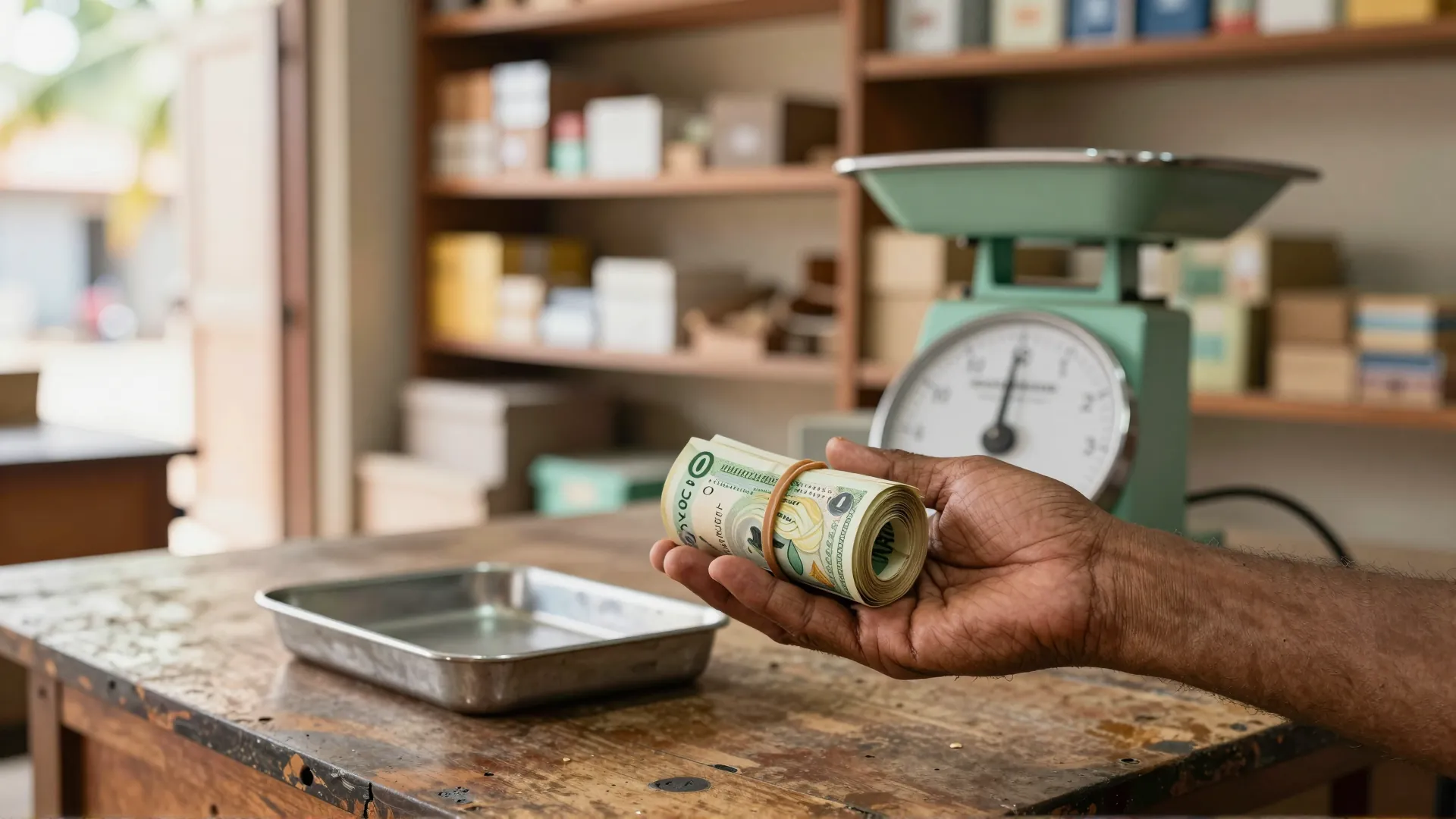
Here's a way to turn a legitimate Rs. 600,000 business cost into a Rs. 216,000 tax bill: pay it in cash. Same expense, same supplier, same invoice. The only thing that changed was how the money moved, and that alone can wipe out the entire deduction.
This catches people off guard because it feels wrong. The expense is real. You have the receipt. You actually spent the money on your business. So why can't you deduct it? Because Sri Lankan tax law cares not just about what you paid for, but how you paid. Get the cash expense tax deduction rule wrong and a payment method alone can cost you the whole deduction.
Let's go through exactly when cash kills a deduction, and the simple step that keeps you safe.
What is the Rs. 500,000 cash payment rule?
Section 10(2A) of the Inland Revenue Act sets a limit on cash payments. If you make a payment to another person that reaches Rs. 500,000 or more and you don't route it through an approved banking channel, the law disallows it.
The disallowance is total, not partial. This is the part people underestimate:
- The whole expense is gone. It's not capped or reduced. The entire payment is not allowed as a deduction in calculating your income.
- It's not just income deductions. The amount also can't be treated as the cost of an asset. So if you bought equipment, you lose the capital allowances (depreciation) on it too, and it's excluded from the cost base when you eventually sell.
The rule has been in force since May 8, 2023, when it was introduced by the Inland Revenue (Amendment) Act No. 4 of 2023. It's not new, and the Inland Revenue Department is increasingly focused on traceability of payments, so it's not one to treat as theoretical.
The important reframe: the rule isn't really anti-cash. It's anti-untraceable. The state wants a money trail for large business payments. Pay through a channel that leaves one, and you're fine. Pay hand-to-hand in notes, and you're not.
What counts toward the Rs. 500,000 threshold?
People assume they can dodge the rule by breaking a big payment into smaller ones. You can't. The Rs. 500,000 is measured in aggregate, and the law spells out three ways it adds up:
- In a single day. Multiple cash payments to the same person on the same day are totalled.
- In a single transaction. One purchase on a single invoice, receipt, or statement, even if you pay it off in pieces.
- In a series of transactions relating to one event. This is the anti-splitting catch. Breaking one purchase into several smaller payments doesn't save you if they all relate to the same underlying event.
Splitting a Rs. 600,000 purchase into two Rs. 300,000 cash payments does not keep it deductible. Because both relate to one event, they aggregate past Rs. 500,000 and the whole Rs. 600,000 is disallowed. Structuring around the threshold this way is exactly what the "series relating to one event" wording is there to stop.
Which payment methods keep an expense deductible?
To keep a payment of Rs. 500,000 or more deductible, it has to move through a bank or financial institution in Sri Lanka. The approved methods are:
- An account payee cheque or account payee bank draft
- A credit card, debit card, or electronic payment through a bank account
- Depositing cash directly into the recipient's bank account
That last one matters, and it's the practical escape hatch. Confirmed by the Inland Revenue (Amendment) Act No. 11 of 2026, depositing cash straight into your supplier's account counts as an approved method. So even if your business runs largely on cash, you don't have to find a cheque book. Walk the cash to the bank and deposit it into the payee's account, and the payment stays deductible because now there's a record.
If a supplier insists on cash for a payment of Rs. 500,000 or more, don't hand over notes. Deposit the cash into their bank account instead and keep the deposit slip. It's the same money to them, but it converts a fully disallowed expense into a fully deductible one.
For the broader picture of which costs even qualify as deductions before this rule applies, see our guide on what expenses a Sri Lankan freelancer can deduct.
Are there any exceptions to the rule?
Yes. The cash restriction does not apply to certain payments, regardless of size:
- Payments to or by the Government of Sri Lanka or a government institution
- Payments to or by a bank or financial institution
- Other classes of persons or payments the Minister may prescribe
So a large cash payment to a government body, or a transaction with a bank, isn't caught by Section 10(2A). For everyday business-to-business and business-to-supplier payments, though, you're squarely inside the rule, and the exceptions won't help you.
What does paying in cash actually cost you? (worked example)
Take Suresh, who runs a small printing business taxed at a top marginal rate of 36%. He buys a second-hand machine from another business for Rs. 600,000 and pays the seller in cash, by hand.
Because the payment is over Rs. 500,000 and didn't go through a bank channel, Section 10(2A) disallows it entirely. The damage is double:
| Item | If paid in untraceable cash | If paid through a bank channel |
|---|---|---|
| Deduction / capital allowance base | Rs. 0 (disallowed) | Rs. 600,000 |
| Extra tax at 36% on the lost Rs. 600,000 | Rs. 216,000 | Rs. 0 |
| Can claim depreciation later? | No | Yes |
By paying in cash, Suresh hands the tax office an extra Rs. 216,000, because the Rs. 600,000 he genuinely spent can't reduce his taxable income, and he can't depreciate the machine either. Had he deposited the same Rs. 600,000 into the seller's bank account, the expense would be fully deductible and the machine fully depreciable. Same money out of his pocket. A Rs. 216,000 swing in tax, decided purely by payment method.
If asset purchases are a regular part of your business, our guide on how capital allowances are calculated explains the depreciation you'd be giving up.
How do I stay deductible?
The fix is genuinely simple. For any business payment of Rs. 500,000 or more:
- Don't pay in hand-to-hand cash. That's the only thing the rule actually penalises.
- Use a traceable channel. Cheque, bank draft, card, transfer, or a cash deposit into the payee's account all work.
- Keep the proof. The cheque counterfoil, transfer confirmation, or deposit slip is what ties the payment to the channel if you're ever asked.
- Watch the aggregation. Remember that same-day, same-invoice, and same-event payments add up. Judge the threshold by the total, not the individual slip.
So, can you deduct cash business expenses in Sri Lanka? For small payments, yes, without a second thought. But once a payment reaches Rs. 500,000, the method decides everything. Route it through a bank channel and the deduction is yours. Hand over cash and you lose it entirely, this year and, for assets, every year of depreciation after. Knowing that one threshold is worth real money. If you want to see how the deduction feeds into your final bill, our income tax calculation guide walks through the rest.
Frequently asked questions
Quick answers to common questions on this topic.
Can I deduct a business expense I paid in cash in Sri Lanka?
Usually yes, if the payment is under Rs. 500,000. But a single payment of Rs. 500,000 or more made in untraceable cash is entirely disallowed under Section 10(2A) of the Inland Revenue Act. To keep a payment of that size deductible, it must go through a bank channel such as a cheque, card, transfer, or a cash deposit into the payee's account.
What is the cash payment limit for tax deductions in Sri Lanka?
Rs. 500,000. Under Section 10(2A), if a payment to another person reaches Rs. 500,000 or more in aggregate and is not made through an approved banking channel, the whole amount is disallowed as a deduction and cannot be treated as the cost of an asset. The rule has applied since May 8, 2023.
Does the rule apply if I split a payment into smaller amounts?
No, splitting does not help. The Rs. 500,000 threshold is measured in aggregate across a single day, a single transaction on one invoice, or a series of transactions relating to one event. So paying for one Rs. 600,000 purchase as two Rs. 300,000 cash instalments still breaches the rule and loses the deduction.
Can I pay by depositing cash into the supplier's bank account?
Yes. Depositing cash directly into the recipient's bank account is an approved method, confirmed by the Inland Revenue (Amendment) Act No. 11 of 2026. The problem the rule targets is untraceable hand-to-hand cash. Once the money goes through a bank account, even as a cash deposit, the payment stays deductible.
Are payments to the government affected by the cash rule?
No. Payments to or by the Government of Sri Lanka or a government institution are exempt from the Section 10(2A) cash restriction, as are payments to or by a bank or financial institution. The Minister may also prescribe other exempt classes of persons or payments. For these, the Rs. 500,000 cash limit does not apply.
Does the cash rule affect capital allowances on assets?
Yes. If you buy an asset for Rs. 500,000 or more and pay in untraceable cash, the amount is not treated as the cost of the asset. That means you cannot claim capital allowances (depreciation) on it, and it is excluded from the cost base when you later calculate a gain on selling the asset.
When did the cash payment deduction rule start in Sri Lanka?
The restriction was introduced by the Inland Revenue (Amendment) Act No. 4 of 2023 and came into operation on May 8, 2023. It sits in Section 10(2A) of the Inland Revenue Act No. 24 of 2017 and has applied to qualifying payments of Rs. 500,000 or more ever since.
Related reading
All articles →
Tax Exempt Income in Sri Lanka: Is Your Money Taxable?
Is your EPF, lottery win, pension or share gain tax exempt in Sri Lanka? Check each receipt against the Inland Revenue Act's list of exempt amounts.
Tax Relief vs Exemption vs Credit in Sri Lanka
Relief, exemption, qualifying payment, tax credit: four Sri Lankan tax words that work at different steps. One worked example shows where each one applies.
Money From Family Abroad: Is It Taxable in Sri Lanka?
Is money your family sends from abroad taxable in Sri Lanka? See where the Inland Revenue Act draws the line between a gift and income, and what records to keep.