Solar Tax Relief in Sri Lanka: Up to Rs. 600,000 a Year
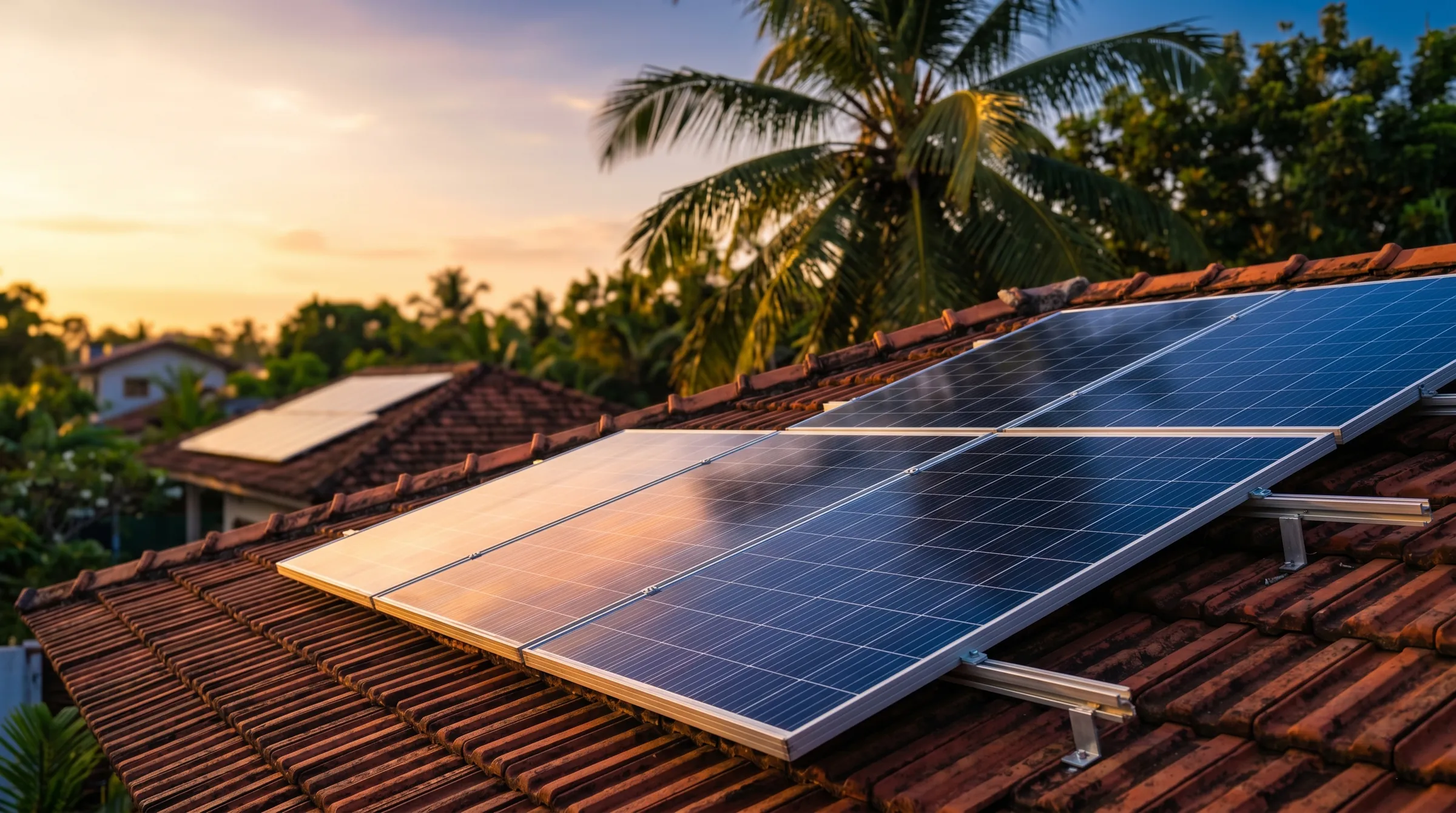
Sri Lanka has been quietly running one of the more generous renewable-energy tax incentives in the region. If you have installed solar panels on your home, or you are thinking about it, you can deduct a substantial chunk of the cost from your taxable income, year after year, until you have effectively claimed back the whole installation.
Most homeowners hear "Rs. 600,000 relief" and assume it is a one-shot deduction in the year of installation. It is not. The same Rs. 600,000 is available again the next year, and the year after that, until the full system cost has been recovered through tax savings.
This guide walks through what the relief is, exactly who qualifies, and how the multi-year claim works for a real Rs. 2,000,000 solar installation. By the end you will be able to estimate, to the rupee, how much tax this relief saves you.
What is the solar tax relief in Sri Lanka?
The solar tax relief is a deduction available to resident individuals who install on-grid solar PV systems on their own premises. It is granted under Section 52 of the Inland Revenue Act No. 24 of 2017, with the specific mechanics set out in Paragraph 2(g) of the Fifth Schedule of the Act.
Mechanically, the relief works like the personal relief or the rental income relief. It is subtracted from your assessable income before the progressive tax slabs are applied. So if your assessable income is Rs. 5,000,000 and you claim Rs. 600,000 in solar relief and Rs. 1,800,000 in personal relief, only Rs. 2,600,000 of your income gets taxed.
"Assessable income" is your total income from all sources before any reliefs are applied. "Taxable income" is what's left after reliefs are deducted. Tax is calculated on taxable income, not assessable income.
How much can I claim, and for how many years?
The cap is Rs. 600,000 per Year of Assessment. But here is the part most people miss: the same Rs. 600,000 ceiling resets every year.
Under Paragraph 2(g) of the Fifth Schedule, you keep claiming the annual relief until your cumulative deductions across all years equal one of two things:
- The total expenditure you incurred to acquire the solar panels, or
- If you bought the system with a bank loan, the total amount you have repaid to the bank.
So a small system can be fully claimed in a single year. A larger system spreads the relief over multiple years. Let's walk through what that looks like for a Rs. 2,000,000 installation, starting from the Year of Assessment 2024/2025.
Worked example: Rs. 2,000,000 solar system over 4 years
Suppose you install a Rs. 2,000,000 on-grid solar system in March 2025, near the end of YoA 2024/2025. Your assessable income is Rs. 5,000,000 each year.
| Year of Assessment | Solar relief claimed | Cumulative claimed | Remaining cost |
|---|---|---|---|
| 2024/2025 | Rs. 600,000 | Rs. 600,000 | Rs. 1,400,000 |
| 2025/2026 | Rs. 600,000 | Rs. 1,200,000 | Rs. 800,000 |
| 2026/2027 | Rs. 600,000 | Rs. 1,800,000 | Rs. 200,000 |
| 2027/2028 | Rs. 200,000 | Rs. 2,000,000 | Rs. 0 |
In Year 4, you can only claim the Rs. 200,000 that is left of the original cost. After that, the relief is exhausted for this installation.
If you financed the panels with a bank loan, the cap each year is also limited by what you have actually repaid to the bank by year-end. Plan your claims around your loan repayment schedule, not just the system's sticker price.
Who is eligible for solar tax relief?
The Inland Revenue Act sets four strict conditions. All four must be met for the relief to apply.
- Resident individual. You have to be a tax resident of Sri Lanka in the Year of Assessment you are claiming.
- You acquired the panels. The legal purchaser must be you, the person claiming the relief. A landlord cannot claim relief on panels their tenant paid for, and vice versa.
- Fixed on your own premises. The panels must be installed on property you own. Renters generally cannot claim, because they do not own the building where the system is fixed.
- Connected to the national grid. The system has to be an on-grid installation, with a connection through Ceylon Electricity Board (CEB) or LECO. Off-grid setups, standalone battery systems, and portable solar panels do not qualify.
"On-grid" means your solar system feeds power back into the national grid and you have a bidirectional meter (net metering, net accounting, or net plus). "Off-grid" means your panels feed a battery for personal use only. Only on-grid systems qualify for the relief.
How much tax does solar relief actually save me?
Tax savings depend on the marginal slab your relief sits in. Since solar relief reduces your taxable income, the saving is the amount of relief multiplied by the rate of the highest slab it pushes you out of.
Let's run the numbers for our Rs. 5,000,000-income earner. The tax brackets and personal relief changed between YoA 2024/2025 and YoA 2025/2026, so the total tax differs by year, even though the solar saving itself stays the same at this income level. For a deeper walkthrough of how the slabs work, see our guide on calculating Sri Lankan income tax.
| Year of Assessment | Relief claimed | Tax without relief | Tax with relief | Annual saving |
|---|---|---|---|---|
| 2024/2025 | Rs. 600,000 | Rs. 918,000 | Rs. 702,000 | Rs. 216,000 |
| 2025/2026 | Rs. 600,000 | Rs. 672,000 | Rs. 456,000 | Rs. 216,000 |
| 2026/2027 | Rs. 600,000 | Rs. 672,000 | Rs. 456,000 | Rs. 216,000 |
| 2027/2028 | Rs. 200,000 | Rs. 672,000 | Rs. 600,000 | Rs. 72,000 |
| Total | Rs. 2,000,000 | Rs. 720,000 |
So a Rs. 2,000,000 solar system effectively returns Rs. 720,000 in tax savings over 4 years, on top of whatever you save on your CEB bill from net metering. At a Rs. 5,000,000 income, each full Rs. 600,000 claim sits entirely within the top 36% slab, so it saves Rs. 216,000 a year, and the final partial Rs. 200,000 claim saves Rs. 72,000. The total tax differs between years (Rs. 918,000 in 2024/2025 versus Rs. 672,000 from 2025/2026) because the personal relief rose from Rs. 1,200,000 to Rs. 1,800,000, but the solar saving itself stays pinned at the top marginal rate.
The YoA 2027/2028 figures assume the current 5-bracket schedule remains in force. If the IRD adjusts the rates in a future budget, your actual saving for that year will shift accordingly.
What documents do I need to claim it?
Reliefs are documentation-heavy, and the IRD can ask for proof during an assessment up to several years after you have filed. Keep these on file for the entire claim period:
- Installation invoice from the solar contractor, showing the full system cost
- Proof of payment: bank slips, online transfer confirmations, or cheque copies
- Grid connection confirmation from CEB or LECO, including the connection date and connection type
- Loan documents and yearly repayment statements, if you financed the system
If you claim solar relief without supporting documents and the IRD challenges the deduction, they can disallow the relief, recalculate your tax, impose a penalty for the resulting underpayment under Section 180 of the Inland Revenue Act, and charge interest from the original due date under Section 157.
How do I claim solar relief when filing?
Solar relief is claimed on your annual tax return, but its impact starts earlier, at the quarterly instalment stage.
When you prepare your Statement of Estimated Tax (SET) at the start of the Year of Assessment, include the Rs. 600,000 (or your remaining balance, if you are partway through a multi-year claim) in your total reliefs. That reduces your estimated annual tax, which in turn reduces each of the four quarterly instalments due on August 15, November 15, February 15, and May 15. Our quarterly tax payments guide walks through the SET in detail.
At year-end, when you file your annual return, the solar relief appears in the reliefs section alongside personal relief and any rental income relief. The form itself does not ask for invoice numbers, but you must keep the supporting documents in case the IRD requests them.
How does Taxable handle solar relief?
Tracking a multi-year claim manually is where most taxpayers come unstuck. You need to remember how much you have already claimed in prior years, what is left of the cost, and how to fold that figure into the current year's SET before the August 15 deadline rolls around.
Taxable does this automatically. When you record your solar installation once, the app:
- Calculates the Rs. 600,000 annual cap for the current year and reduces it to your remaining balance in the final year of the claim
- Carries forward your cumulative claim across Years of Assessment, so you never accidentally over-claim
- Stores your installation invoice, payment proofs, and grid connection certificate as supporting documents tied to the relief record
- Updates your quarterly tax estimate the moment the relief is added, so your next instalment reflects the lower liability
The same applies to your other reliefs and to broader tax compliance, including the recently increased Rs. 1,800,000 personal relief that we covered in our breakdown of the YoA 2025/2026 changes.
If you have just installed solar, the most important thing you can do today is record the installation invoice, the proof of payment, and the grid connection confirmation. The relief is worth real money, sometimes more than the panels themselves earn back through net metering in the same period. Make sure it ends up on your return.
Frequently asked questions
Quick answers to common questions on this topic.
What is the maximum solar tax relief in Sri Lanka?
Resident individuals can claim up to Rs. 600,000 per Year of Assessment for on-grid solar panel expenditure under Section 52 and Paragraph 2(g) of the Fifth Schedule of the Inland Revenue Act. The cap is annual, not a one-time deduction, and the relief continues each year until cumulative claims reach the total cost of the system.
Can I claim solar tax relief every year?
Yes. The Rs. 600,000 cap is a per-year allowance. You can continue claiming it in each Year of Assessment until your cumulative deductions equal the total amount you spent on the solar panels, or the total amount you have repaid on a bank loan obtained to purchase them, whichever applies in your case.
Does off-grid solar qualify for the tax relief?
No. The relief applies only to solar PV systems connected to the national electricity grid. Off-grid systems, standalone battery setups, and portable solar panels do not qualify, even if they are installed on your own premises. A grid connection through CEB or LECO is required to claim the relief.
Can I claim solar relief on a system installed at a rented property?
The Inland Revenue Act requires the panels to be fixed on your own premises. If you do not own the building, you typically cannot claim the relief. Solar systems installed at rented properties usually belong to the landlord for tax purposes, and only the legal acquirer of the panels can deduct the expenditure.
How much tax does the solar relief actually save?
It depends on your marginal tax rate. For YoA 2025/2026, the top slab is 36 percent and the second highest is 30 percent. A full Rs. 600,000 deduction that lands in the 36 percent bracket saves you Rs. 216,000 in tax that year. Lower marginal rates produce proportionally smaller savings.
What documents do I need to claim the solar tax relief?
Keep the installation invoice, proof of payment, and the grid connection confirmation issued by CEB or LECO. If you financed the system with a bank loan, also keep loan statements showing each year's repayments, since the multi-year claim is capped at the total cost or total loan repayments, whichever applies.
Does solar relief reduce my quarterly tax instalments?
Yes. When you prepare your Statement of Estimated Tax (SET), include solar relief in your reliefs total. That lowers your estimated annual tax and, in turn, each quarterly instalment due on August 15, November 15, February 15, and May 15. The smaller instalments keep your cash flow healthier through the year.
Can I claim solar relief alongside other tax reliefs?
Yes. Solar relief stacks with the Rs. 1,800,000 personal relief for YoA 2025/2026 and the rental income relief if you have rental income. All eligible reliefs are deducted from your assessable income to arrive at taxable income, which is then taxed at the progressive 6 to 36 percent slabs.
Related reading
All articles →
Tax Exempt Income in Sri Lanka: Is Your Money Taxable?
Is your EPF, lottery win, pension or share gain tax exempt in Sri Lanka? Check each receipt against the Inland Revenue Act's list of exempt amounts.

Tax Relief vs Exemption vs Credit in Sri Lanka
Relief, exemption, qualifying payment, tax credit: four Sri Lankan tax words that work at different steps. One worked example shows where each one applies.

Money From Family Abroad: Is It Taxable in Sri Lanka?
Is money your family sends from abroad taxable in Sri Lanka? See where the Inland Revenue Act draws the line between a gift and income, and what records to keep.