Home Office Expenses: A Sri Lankan Freelancer's Guide
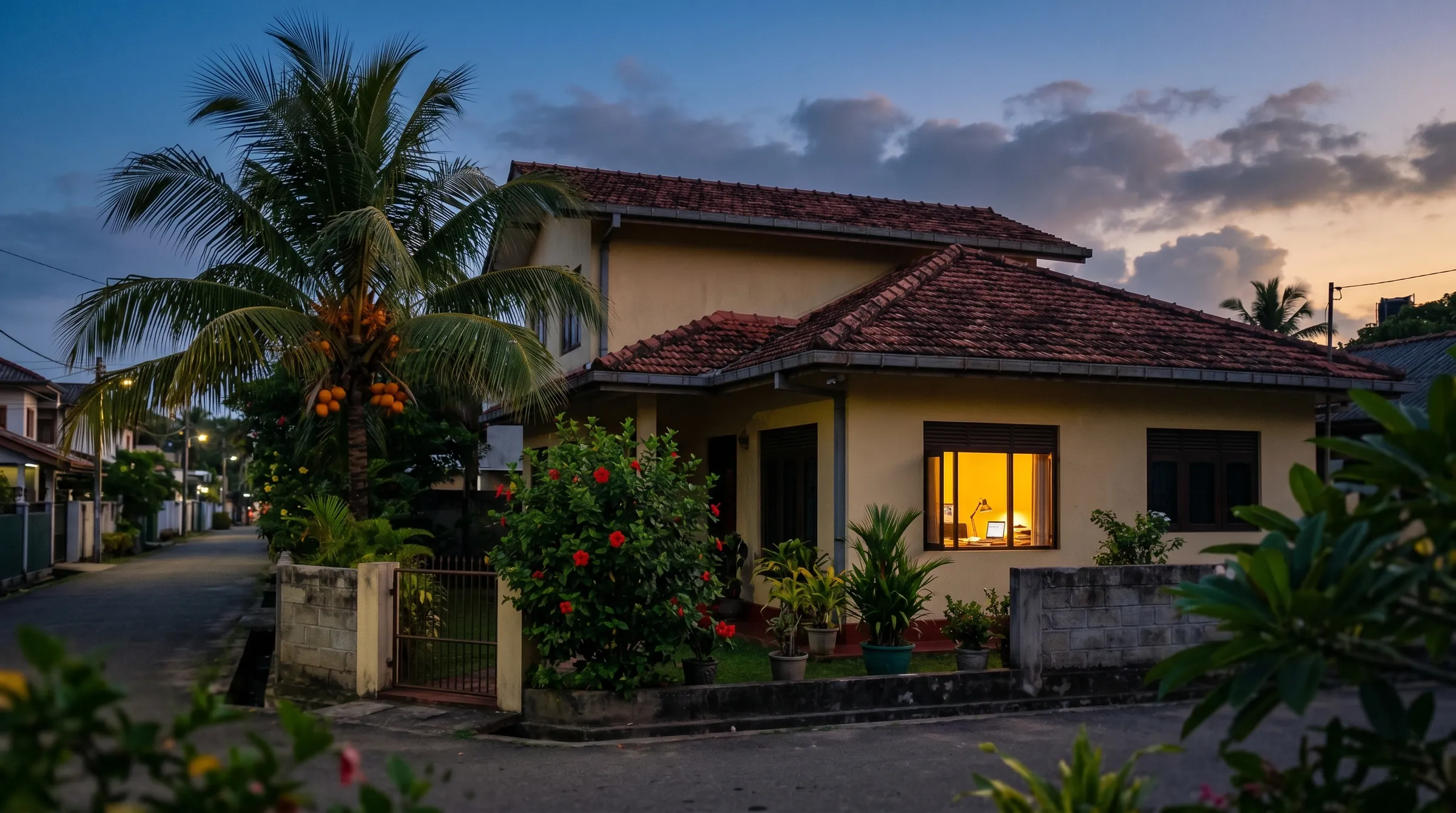
Working from your kitchen table doesn't make your kitchen tax-deductible. But it doesn't mean you can't claim anything either. Somewhere between "everything's a business expense" and "I can't claim my home" sits the rule the Inland Revenue Department actually applies, which is that you can deduct the business share of any mixed-use cost. The trick is figuring out what that share is and being able to defend it.
This article walks through the math for the two bills almost every Sri Lankan freelancer faces: home internet and electricity. If you also want the broader picture on what counts as a deductible expense, our freelancer expenses guide covers the full list. This one goes deep on the proportions.
Can I deduct my home internet and electricity as a freelancer?
Yes, partly. The rule is in Section 11(1) of the Inland Revenue Act, No. 24 of 2017. You can deduct an expense "to the extent" it's incurred in the production of business income. Those four words do a lot of work. They mean: not 100%, not 0%, but the actual business share, whatever that genuinely is.
The other half of the rule is Section 10(1)(b) combined with Section 197, which expressly disallows domestic expenditure. Personal life is non-deductible. Period. So your monthly bill gets split into two slices, the business slice you claim and the personal slice you don't.
The Act doesn't prescribe a single method for working out the split. IRD official guidance (Example 4.4.3.1.1) simply says you "must apportion the expenses between business and home" and only the business portion is deductible. What matters is that your method is reasonable and consistently applied.
What does "proportionate share" actually mean?
"Proportionate share" is just a polite way of saying percentage. Pick a method, calculate a number, multiply your bill, and that's your deduction. The three methods most freelancers use:
- Floor-area method. What percentage of your home, by space, is your office? A 100 sqm flat with one 20 sqm room used as a workspace gives you 20%.
- Time-of-use method. How many hours a day do your work devices run, as a fraction of total household hours? Eight hours of laptop and monitor use out of a 24-hour day is roughly 33%.
- Device-load method. What share of total household electricity consumption comes from your work devices? Useful for electricity, less so for internet.
Internet is easier than electricity because there's only one bill and one connection. Electricity is more nuanced because every appliance in your house is on the same meter. Don't feel locked into one method. Use whichever fits the bill in front of you, and write down which one you used.
How do I calculate the business share of my internet bill?
Internet apportionment is mostly about honest estimation. You're paying one fixed monthly fee, and the question is what fraction of that connection your business actually uses.
A typical Sri Lankan freelancer working from home full time on a shared family connection might land around 70%. They're online from 9 to 6 for client work, the family streams in the evenings, and weekends are mixed.
Worked example. Your home fibre bill is Rs. 6,500 per month including taxes. Your honest assessment of business use is 70%.
| Item | Amount (LKR) |
|---|---|
| Monthly internet bill | 6,500 |
| Business-use percentage | 70% |
| Monthly deductible | 4,550 |
| Annual deductible (× 12) | 54,600 |
Over a Year of Assessment, that's Rs. 54,600 off your business income, before the tax rate touches it. If you're in the 15% concessionary band as an Individual Service Exporter, that's Rs. 8,190 of tax you don't pay. If you're in the upper progressive slabs, the saving is larger.
How do I calculate the business share of my electricity bill?
Electricity is the trickier one because the bill covers everything: fans, fridge, lights, the AC, your laptop, your second monitor, and so on. Two methods work well here.
Method 1: floor-area. Suppose you live in a four-room home and one room is your dedicated office. Floor share is 25%. If you also run the office AC during work hours, you might bump the share up to 30% to reflect heavier consumption in that one room.
Method 2: device-load. A laptop, an external monitor, and an office AC running 8 hours a day account for roughly 2 to 3 kWh of consumption. A typical Sri Lankan household uses around 8 to 10 kWh a day. So your work load is around 25% to 35% of total consumption.
Worked example. Your monthly electricity bill averages Rs. 12,000. You apply the floor-area method with an AC adjustment and arrive at 30% business use.
| Item | Amount (LKR) |
|---|---|
| Monthly electricity bill | 12,000 |
| Business-use percentage | 30% |
| Monthly deductible | 3,600 |
| Annual deductible (× 12) | 43,200 |
The two methods will usually give different answers within a narrow band. Pick the one you can defend more easily, document the math, and move on. Don't agonise over a 3% difference.
For electricity specifically, the time-of-use method is the easiest to defend. Note the hours per day your work devices run, divide by 24, and apply the resulting percentage. The math is simple, the rationale is intuitive, and the IRD has no quarrel with an honest hours-based split.
What documentation do I need to keep?
Section 120 of the Inland Revenue Act requires every taxpayer running a business to maintain records sufficient to ascertain gains and profits. For utilities specifically, you need three things on file:
- The monthly bill. Either the original paper bill or a downloaded PDF. Keep all twelve months for each Year of Assessment.
- Proof of payment. A bank statement entry, a digital wallet receipt, or a paid stamp on the bill itself.
- Your apportionment rationale. One short note explaining how you arrived at your business percentage. "70% business: I work full time from home, family uses connection in evenings and weekends" is enough.
Keep these records for 5 years from the end of the Year of Assessment they relate to. The IRD can request them at any point during a review.
Claiming 100% of a household internet or electricity bill when you also live in the home is almost always indefensible. If the IRD reduces your claim during a review, you'll face an under-assessment, plus penalties and monthly interest on the unpaid tax under Section 178. A modest, defensible split is worth more than an aggressive one you can't justify.
What's a worked example of the full annual calculation?
Let's put it together. You're a freelance designer billing Rs. 4,500,000 a year, working from home in Colombo. Your monthly home bills work out as follows:
| Bill | Monthly (LKR) | Business % | Monthly deduction (LKR) | Annual deduction (LKR) |
|---|---|---|---|---|
| Internet | 6,500 | 70% | 4,550 | 54,600 |
| Electricity | 12,000 | 30% | 3,600 | 43,200 |
| Mobile (work calls + personal) | 3,500 | 60% | 2,100 | 25,200 |
| Total | 123,000 |
That's Rs. 123,000 of home-office utility deductions in one Year of Assessment. At a 15% concessionary rate for service exporters, that's roughly Rs. 18,450 of tax saved on these three bills alone. If you also claim rent apportionment and capital allowances on your laptop and monitor, the savings stack.
For a fuller picture of how these deductions flow into your tax, see our guides on how to calculate income tax in Sri Lanka and quarterly tax payments.
How does Taxable handle the proportions for you?
The hardest part of home-office deductions isn't the math. It's remembering to do the math, every month, for every bill, and keeping the rationale next to the receipt. Most freelancers either skip it (and overpay) or get inconsistent across the year (and can't defend it).
Taxable solves this by letting you set an allocation percentage once per expense category. Log your internet bill, set it to 70% business, and the system applies that split on every future entry. Same for electricity, mobile, rent. When you upload a bill, the deductible portion flows automatically into your Statement of Estimated Tax and your quarterly instalment math. You get a defensible audit trail without the monthly admin.
Home-office expenses are one of the easiest deductions to claim and one of the easiest to mess up. Pick a method, apply it consistently, write down why, and keep the bills. Do that, and a meaningful chunk of your home running costs become a legitimate cost of doing your freelance business.
Frequently asked questions
Quick answers to common questions on this topic.
Can a freelancer in Sri Lanka deduct part of their home internet bill?
Yes. Section 11(1) of the Inland Revenue Act lets you deduct expenses to the extent they're incurred in producing business income. If you use your home internet 70% for client work, you can claim 70% of the bill. The personal share remains non-deductible under Section 10(1)(b) and Section 197 of the Act.
What's the right way to calculate the business share of an electricity bill?
There's no single mandated formula. The IRD accepts any reasonable method that reflects actual use. Common approaches are floor-area (the share of your home used as an office) or time-of-use and device-load (the share of total household consumption your work devices account for). Keep a written note explaining how you arrived at the percentage.
Can I claim 100% of my internet bill if I work from home full time?
Only if you genuinely don't use that connection for anything personal, which is rare. The honest split for a freelancer working full time from home is usually 60% to 80% business, depending on household usage. Claiming 100% on a shared connection invites a downward adjustment if the IRD reviews your return.
Do I need to keep electricity and internet bills for tax?
Yes. Section 120 of the Inland Revenue Act requires every business to keep source documents including invoices, bank statements, and receipts. For utilities, that means the monthly bill, proof of payment, and your written rationale for the business share. Keep records for at least 5 years from the end of the relevant Year of Assessment.
What method does the IRD accept for splitting mixed-use bills?
The Act doesn't prescribe one method. It requires the apportionment to be reasonable and to reflect actual business use. Floor-area, time-of-use, and device-load methods are all accepted, as long as you can explain how you arrived at your percentage. Document the method itself, not just the result.
Is rent paid on a home that doubles as my office deductible?
Only the portion attributable to business use. If you rent a three-bedroom home and one room is your dedicated office, you can claim roughly one-third of the rent under Section 11. The same applies to municipal rates and any building-wide service charges, apportioned by the same method you use for utilities.
What if my electricity usage changes month to month?
The percentage can be reviewed annually rather than recalculated every month. Pick a method, apply it consistently across the Year of Assessment, and revisit it if your circumstances change. The IRD looks for consistency and a defensible rationale, not perfection across each individual bill.
Related reading
All articles →
Can Freelancers Deduct Vehicle and Fuel Costs in Sri Lanka?
You can deduct your car's fuel, servicing, and insurance by business-use share, but not the car itself. How vehicle tax deductions work for Sri Lankan freelancers.

How Is YouTube and AdSense Income Taxed in Sri Lanka?
YouTube and AdSense income in Sri Lanka is foreign-source income, taxable since April 2025 at a capped 15% rate. Here's how it works, with a worked example.
Foreign Income Tax in Sri Lanka: Gross or Net?
Do Sri Lankan freelancers pay foreign income tax on the gross invoice or the net amount after platform and bank fees? Here is the rule, and the catch.