Selling Your Main Home in Sri Lanka: Capital Gains Tax
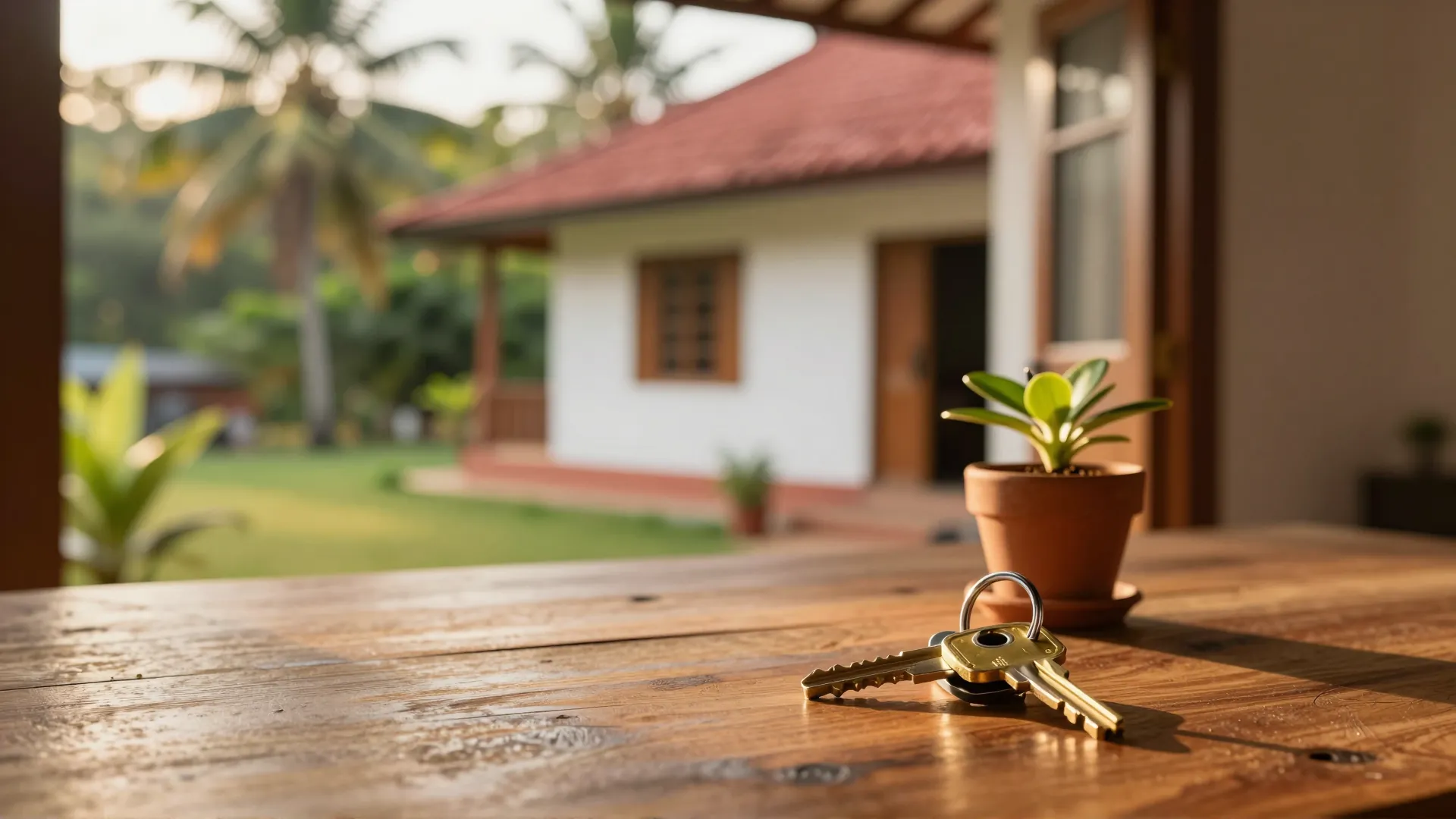
You are selling the house you live in. Maybe you are upgrading, moving cities, or cashing out after years. And a worry shows up: will the tax office take a slice of the gain?
For most people selling their actual home, the answer is no. Sri Lanka exempts the gain on your main home from capital gains tax, as long as you meet two conditions. But the conditions are specific, and if you trip over either one, the same sale becomes taxable at 15%. The difference can be over a million rupees.
Here is exactly when your home sale is tax free, and when it is not.
Do you pay capital gains tax when you sell your main home?
In most cases, no. The gain on your principal place of residence is an exempt amount under Paragraph (g) of the Third Schedule of the Inland Revenue Act. It is also written into the definition of an "investment asset" in Section 195, which carves your qualifying main home out of the assets that capital gains tax applies to.
So if the home you are selling is genuinely the one you live in, and you meet the ownership and occupancy conditions below, the gain is fully tax free. No 15%, nothing.
Capital gains tax in Sri Lanka is charged on the realization of "investment assets," which includes land and buildings. Your principal residence is deliberately excluded from that net when it meets the conditions. This is a real exemption, not a deferral. The gain simply is not taxed.
The catch is in the word "principal" and the conditions attached to it. A holiday bungalow, a rented-out flat, or a house you bought last year and are flipping does not get this treatment. Let me spell out the test.
What are the conditions for the principal residence exemption?
Two conditions, and you need both.
- Ownership. You must have owned the home continuously for the three years immediately before the date of sale.
- Occupancy. You must have lived in the home for at least two of those three years. This is measured on a daily basis, so part-years are counted in days, not rounded.
Both have to be true, for a resident individual. Own it for three years but rent it out the whole time? You fail the occupancy test. Live in it for years but only bought it eighteen months ago? You fail the ownership test. Either failure makes the gain taxable.
Keep evidence that the home was genuinely your residence: utility bills in your name, your address on official records, the dates you moved in and out. The occupancy test is counted in days, so if you are close to the two-year mark, the exact dates matter.
There is no once-in-a-lifetime cap written into the law. But because each home has to clear the three-year ownership and two-year occupancy bar, you cannot use the exemption on rapid back-to-back sales anyway. The conditions space it out for you.
What if your home doesn't qualify?
Then it is a taxable capital gain, and the tax is 15% of the gain. Let me put real numbers on what that costs.
Say you bought a property in 2020 and are selling it in 2026, but it does not qualify as your principal residence (you rented it out, so it fails the occupancy test).
| Item | Amount |
|---|---|
| Purchase price (2020) | Rs. 18,000,000 |
| Legal fees and transfer costs on purchase | Rs. 500,000 |
| Renovation and improvements | Rs. 1,500,000 |
| Total cost of the asset | Rs. 20,000,000 |
| Sale price (2026) | Rs. 32,000,000 |
| Capital gain | Rs. 12,000,000 |
| Capital gains tax at 15% | Rs. 1,800,000 |
That is Rs. 1,800,000 in tax on a sale that would have been completely tax free if the property had been your qualifying main home. Same gain, same property. The exemption is the whole ballgame.
Capital gains tax must be paid within 30 days after the end of the calendar month in which you sell, not at the end of the year with your other taxes. A sale on July 10, for example, means the tax is due by August 30. Missing that window draws penalties and interest on top of the tax. If your sale is taxable, plan the payment into the deal, do not spend the full proceeds first. Our guide on when to pay capital gains tax covers the timing in detail.
Is there a small-gains exemption for property sales?
There is a small-gains allowance, but it almost never helps with a house.
A capital gain is exempt if it does not exceed Rs. 50,000 and your total gains for the whole Year of Assessment do not exceed Rs. 600,000. That covers minor disposals, a small parcel of land, a modest asset. A typical home sale produces a gain in the millions, far past these thresholds, so the small-gains allowance will not shelter it.
It is worth knowing the allowance exists, because not every capital gain is a house. But for the main-home question, the principal residence exemption is the one that matters.
How is the capital gain calculated?
The gain is simple in principle: what you sold it for, minus what it cost you.
- Consideration received: the sale price, or the market value of the property at the time of sale, whichever is higher. You cannot undercut the tax by recording a low price on a property that is clearly worth more.
- Cost of the asset: what you paid to acquire it, plus incidental costs (legal fees, transfer taxes, advertising), plus money spent improving it (not routine repairs, but genuine improvements).
Gain equals consideration minus cost. One useful rule for long-held homes: if you owned the property as of September 30, 2017, its cost is treated as the market value on that date, not the original price you may have paid decades earlier. That can significantly increase your cost base and shrink the taxable gain.
Personal relief does not apply to capital gains. The Rs. 1,800,000 personal relief reduces your regular income, but capital gains sit on their own separate stream taxed at the flat 15%. We explain why the relief is ring-fenced this way in our guide on how personal relief is applied.
What's the capital gains tax rate now?
For a resident individual, the rate is 15% on realisations from June 3, 2026 onwards.
This is a recent change. The Inland Revenue Amendment Act No. 11 of 2026, certified on June 3, 2026, raised the rate from 10% to 15%. So the date of your sale matters:
| Date of realisation | Capital gains tax rate |
|---|---|
| Before June 3, 2026 | 10% |
| On or after June 3, 2026 | 15% |
If you are selling now, it is the 15% rate that applies to any taxable gain. The rate sits in Paragraph 1(2)(a) of the First Schedule. For the full picture on property disposals, our guide to selling property and capital gains tax walks through the process end to end.
How do I tell if my sale is taxable?
Run the two tests. Did you own the home for the three years before the sale? Did you live in it for at least two of those three years? Two yeses, and your gain is exempt. A single no, and you are looking at 15% on the gain, payable within 30 days of the end of the month in which you sell.
The grey areas are where it gets tricky. A home you lived in, then rented out for the last stretch. A property you co-own. A part-year of occupancy that lands near the two-year line. These are exactly the cases where getting the dates and the cost base right decides whether you owe nothing or owe a lot.
Selling your main home is one of the few times the tax system genuinely leaves you alone, but only if you clear both conditions. Check the three-year ownership and the two-year occupancy before you assume the gain is free. The exemption is generous. The 15% bill for missing it is not.
Frequently asked questions
Quick answers to common questions on this topic.
Do I pay capital gains tax when I sell my main home in Sri Lanka?
Usually no. The gain on selling your principal place of residence is exempt under Paragraph (g) of the Third Schedule, provided you owned the home for the three years before the sale and lived in it for at least two of those three years. If you meet both conditions, the gain is fully tax free.
What are the conditions for the principal residence exemption?
You must have owned the home continuously for the three years immediately before the sale, and lived in it for at least two of those three years, measured on a daily basis. The exemption applies to a resident individual. Miss either the ownership or the occupancy test and the sale becomes taxable.
What is the capital gains tax rate in Sri Lanka now?
For realisations on or after June 3, 2026, the capital gains tax rate for a resident individual is 15%, up from the previous 10%. The change was made by the Inland Revenue Amendment Act No. 11 of 2026. The rate applies to the gain, not the full sale price.
Is there a tax-free allowance for small capital gains?
Yes. A capital gain is exempt if it does not exceed Rs. 50,000 and your total gains for the whole Year of Assessment do not exceed Rs. 600,000. For most property sales the gain is far larger than this, so the small-gains allowance rarely helps home sellers, but it can cover minor disposals.
How is the capital gain on a property calculated?
The gain is the consideration received minus the cost of the asset. Consideration is the sale price or the market value, whichever is higher. The cost includes what you paid to buy it, incidental costs like legal fees and transfer taxes, and money spent improving it. Personal relief cannot be deducted from a capital gain.
What if I owned my home for less than three years?
Then it fails the principal residence exemption, which requires three years of continuous ownership before the sale. The gain becomes a taxable capital gain at 15%. The same applies if you owned it long enough but did not live in it for at least two of the last three years.
Can I claim the main home exemption more than once?
The Inland Revenue Act sets no numerical once-in-a-lifetime limit. But the conditions themselves limit how often you can use it, because you must own each home for three years and live in it for two of those years before selling. In practice that spaces out how frequently the exemption can apply.
Related reading
All articles →
Unit Trust Tax in Sri Lanka: How Fund Returns Are Taxed
How unit trust and mutual fund returns are taxed in Sri Lanka: pass-through vs deemed-dividend funds, what's final, what's creditable, and redemption gains.
Who Declares Rental Income on Joint Property in Sri Lanka?
Sri Lanka taxes each co-owner separately on their share of rental income under Section 29. How to split the rent, the 25% relief, and a future sale.
Is Cryptocurrency Taxed in Sri Lanka?
Yes, crypto gains are taxable in Sri Lanka. Learn the 15% capital gains rate, which transactions trigger tax, the Rs. 50,000 exemption, and how to report crypto.